
Hair Restoration in Lexington, MA
A comprehensive, medical approach to hair loss.
Hair loss can have many causes, which is why treatment begins with understanding the underlying pattern and contributing factors rather than simply performing injections. Hair restoration at Stellar includes a detailed review of your health and hair-loss history, scalp assessment, review or ordering of relevant laboratory testing when appropriate, and an individualized treatment plan based on your diagnosis and goals.
Treatment may include prescription or topical therapies, platelet-rich plasma (PRP) scalp injections, or a combination approach. Just as importantly, hair restoration is ongoing care. Progress is reassessed over time, treatment can be adjusted as needed, and maintenance is incorporated when appropriate to support long-term results.
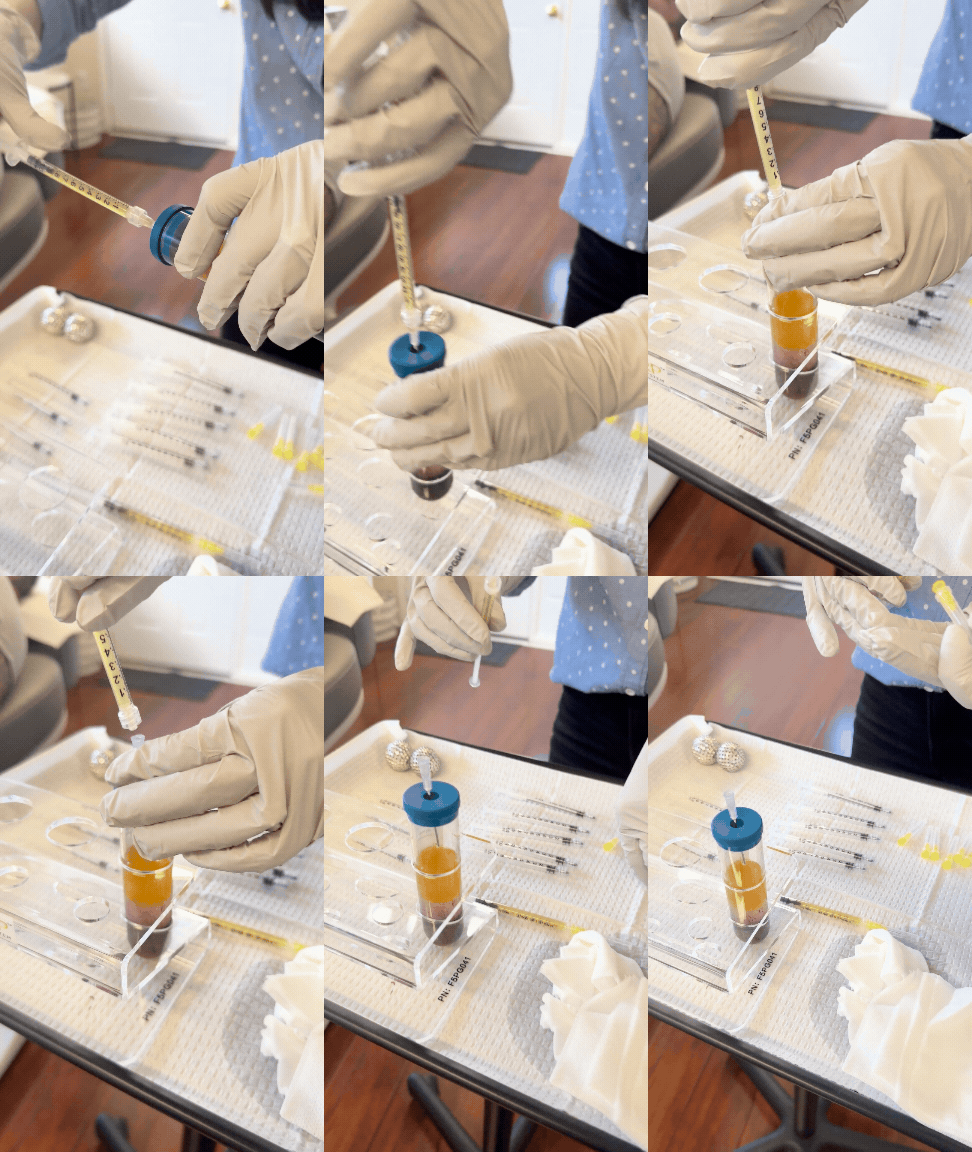
PRP as Part of Your Hair Restoration Plan
Platelet-rich plasma (PRP) is one of the treatment options that may be incorporated into a comprehensive hair restoration plan. A small sample of your blood is processed to concentrate platelets and growth factors, which are then injected into targeted areas of the scalp to support follicle health and hair growth.
PRP is not necessarily a stand-alone treatment. Depending on the cause and pattern of hair loss, it may be combined with prescription or topical therapies and ongoing medical management to create a more complete, individualized approach.
Our Process:
-
1. Consult
—
Comprehensive review of hair-loss history, health history, prior treatments, medications, and goals.
-
2. Assessment
—
Scalp and hair evaluation with review or ordering of relevant laboratory testing when appropriate.
-
3. Treatment
—
An individualized plan that may include prescription or topical therapy, PRP scalp injections, or combination treatment.
-
4. Ongoing Maintenance
—
Progress is monitored over time, with treatment adjusted and maintenance recommended as appropriate.
CLIENT LOVE
CLIENT LOVE

Hair Restoration FAQs
-
PRP (Platelet-Rich Plasma) hair restoration is a minimally invasive treatment that uses the patient’s own blood to stimulate hair growth. The blood is processed to concentrate the platelets, which are then injected into the scalp to promote hair follicle health and encourage the growth of new hair.
-
PRP contains growth factors and proteins that aid in tissue repair and regeneration. When injected into the scalp, these growth factors can stimulate the hair follicles, increase blood supply to the hair roots, and promote the growth of thicker, healthier hair. The process involves drawing a small amount of blood, processing it to extract the PRP, and then injecting it into the areas of the scalp affected by hair thinning or loss.
-
The treatment begins with a blood draw, typically from the arm. The blood is then placed in a centrifuge to separate the platelets from the rest of the blood components. The PRP is collected and injected into the scalp using a fine needle. The procedure usually takes about an hour, including preparation time. After the treatment, you may experience some mild discomfort, redness, or swelling at the injection sites, which usually subsides within a day or two. There is no significant downtime, and you can return to your normal activities immediately.
-
The number of sessions required can vary depending on the individual's hair condition and response to the treatment. Typically, a series of 3-4 sessions spaced about 4-6 weeks apart is recommended for optimal results. Maintenance treatments every 6-12 months may be suggested to sustain and enhance the results. Your provider will create a personalized treatment plan based on your specific needs and goals.
-
PRP hair restoration is suitable for men and women experiencing hair thinning or mild to moderate hair loss. It is most effective for individuals in the early stages of hair loss or those with androgenic alopecia (male or female pattern baldness). However, it may not be suitable for individuals with certain medical conditions, severe hair loss, or those who are pregnant. A consultation with a hair restoration specialist can help determine if PRP therapy is right for you.